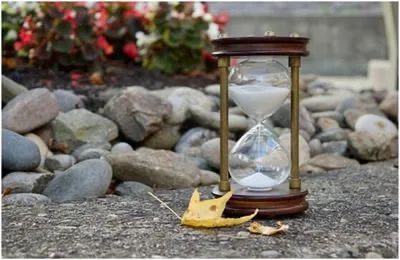
How many times have you found yourself on a Friday evening, sighing, “Wow, this week went by so fast”?
We often live under the illusion that time is an endless reservoir and that tomorrow’s sun is guaranteed to rise. Because of this, we generously surrender our hours to mindless social media scrolling, infinite short videos, and the trivial daily tasks that drain our energy by day and leave us feeling empty by night.
Recently, I came across an ancient, striking Latin concept being discussed online: Memento Mori—“Remember you must die.”
To turn this abstract philosophy into something physical and undeniable, someone created an incredibly simple yet visceral tool: the Life Calendar.
It is just a standard sheet of A4 paper covered in a dense grid of tiny squares. Each square represents one week of your life.
If we assume an average lifespan of 80 years, that is 52 weeks multiplied by 80 years, which equals exactly 4,160 squares.
When you print this sheet out and sit before it, the visual impact is startling. You realize with a jolt that our long, passionate, complex lives, when stripped down to their absolute essence, can fit onto a single sheet of paper—with room to spare.
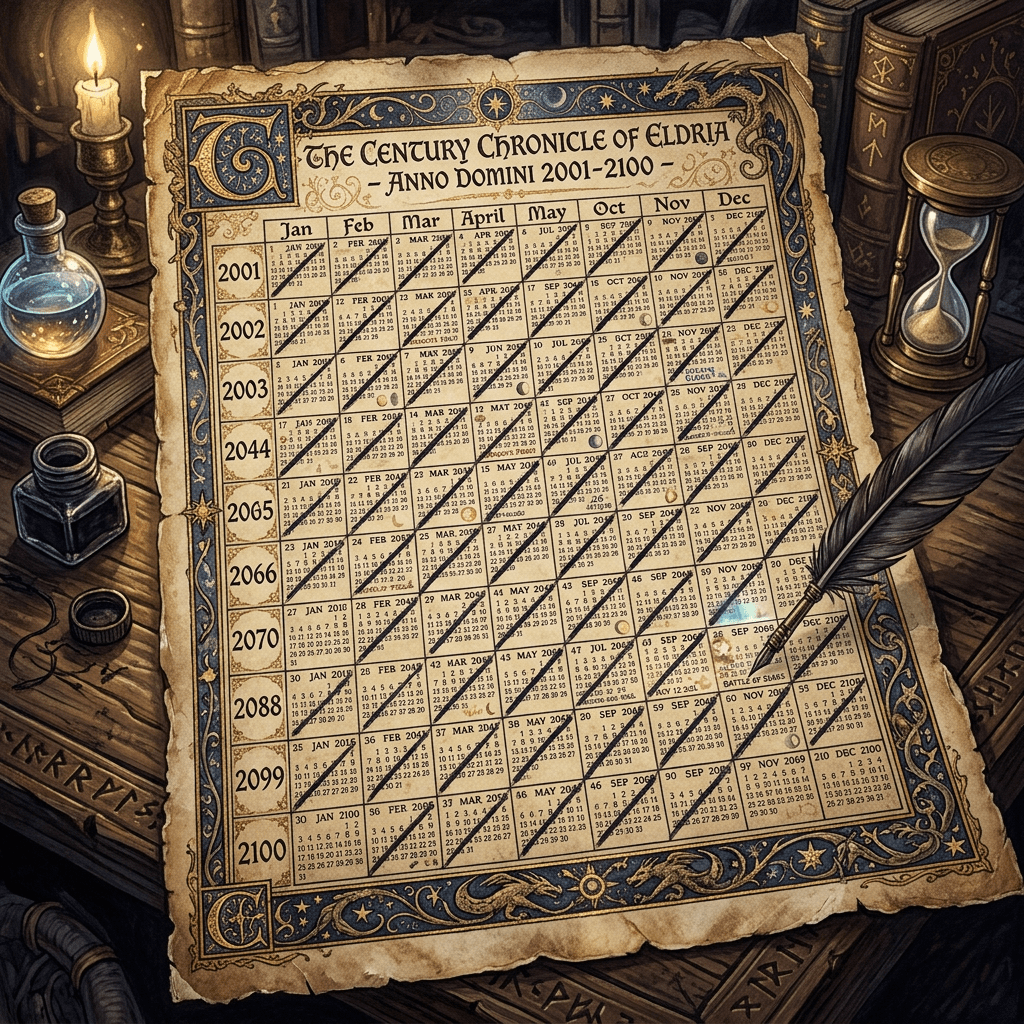
Now, at the end of every weekend, I take a pen and firmly cross off a square.
The scratch of the pen against the paper sounds like the quiet, relentless step of passing time. As the ink buries those past seven days, a few inescapable questions rise to the surface:
- “Is this really all the squares I have left?”
- “What did I actually do with the seven days I just crossed off?”
- “If life is this brief, am I truly willing to trade my remaining squares for superficial social obligations and mental clutter?”
- “Is where I am pouring my heart and energy truly worth the exchange?”
Admittedly, this ritual might seem extreme, even cold—like a daily countdown to the end. But when daily life becomes numb and repetitive, radical measures are often the most effective way to wake up.
Throughout history, those who achieved mastery in their fields often held onto habits that others found bizarre. They were willing to appear eccentric because they understood a fundamental truth: life is too short, and what truly matters must be fiercely guarded.
- Steve Jobs: Every morning, he looked in the mirror and asked, “If today were the last day of my life, would I want to do what I am about to do today?” If the answer was “no” too many days in a row, he knew it was time to change.
- Yuval Noah Harari: The author of Sapiens goes on a strict 60-day silent meditation retreat every single year. For 10 hours a day, he completely disconnects from the digital noise—no phones, no talking.
As Cal Newport notes in Deep Work, a personal ritual might seem strange to outsiders, but if it works for you, it is absolutely worth it. These extraordinary individuals weren’t being quirky; they were aggressively reclaiming their finite time.
Since adopting the Life Calendar, my daily habits have shifted dramatically.

Previously, whenever boredom or fatigue crept in, my hand would instinctively reach for my phone to mindlessly scroll through YouTube or social media feeds. Now, the moment my fingers hover over the screen, that dense grid of 4,160 squares flashes in my mind.
A voice pulls me back: “Careful. You are about to trade a portion of your remaining squares for a few seconds of cheap dopamine. Is it really worth the swap?”
This instant awareness acts as a powerful pattern-interrupter. It keeps me focused and intentional during the day, and gives me the resolve to step away from empty entertainment in the evenings to focus on personal growth and long-term aspirations.
But my practice of crossing off a square each week has a deeper, more profound purpose. It has anchored my spiritual path and Buddhist practice with absolute clarity.
The world is full of dazzling distractions—wealth, achievements, and praise. Yet, looking at that slowly darkening sheet of paper, a quiet truth settles in: when the final square is crossed off and impermanence claims us, not a single cent of wealth or ounce of worldly fame can be taken with us.
I do not want my limited squares to be filled with things that vanish like smoke.
Instead, I want to use this finite life to cultivate eternal value. By practicing the Dharma and dedicating myself to genuine spiritual cultivation, I am building the kind of merit and wisdom that transcends this single lifetime.
The calendar silently urges me every day: Be diligent! Do not waste time! Only by practicing mindfully in the present can we transcend the cycles of suffering and cultivate true, lasting liberation.

As you finish reading this, take a moment to draw your own grid in your mind. Count how many squares you have already crossed off, and look at how many blank spaces remain.
Life is brief, and this world of ours has no shortage of struggles. Stop spending your most precious squares on people and things that do not serve your deeper purpose. Plan wisely, live intentionally, and make every square count. May we all find true freedom and peace within the pages of our finite lives.


