
Modern people are fascinated by longevity.
We study nutrition, exercise, sleep, supplements, medical treatments, and the latest science of aging. We count our steps, monitor our heart rate, change our diets, and search for new ways to add more years to our lives.
But there is another kind of nourishment that is easy to overlook: the nourishment of the heart and spirit.
A Buddhist story from the Treasury of Miscellaneous Treasures (Za Bao Zang Jing) offers a beautiful perspective on this.
During the time of the Buddha, there was a wealthy elder whose young son was deeply loved.
According to the Buddhist scripture, when the child was about five or six years old, a fortune-teller examined him and said that the child had great blessings—but one serious weakness: his life would be short.
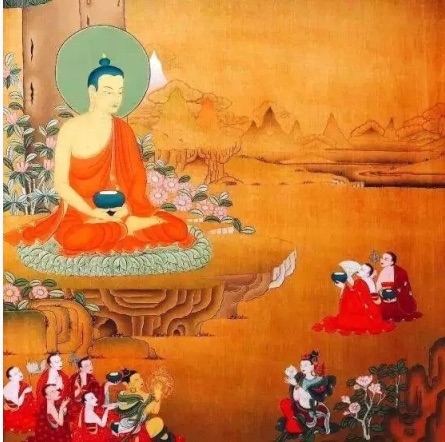
The father was devastated. He searched for ways to help his son live longer and eventually brought him to the Buddha.
The Buddha did not give him a special medicine or promise that death could simply be defeated.
Instead, the Buddha taught the child to cultivate humility, patience, and respect.
The child was instructed to respectfully bow to people entering and leaving the city.
One day, a being who had intended to take the child’s life appeared in the form of a Brahmin. When the child respectfully bowed to him, the being instinctively blessed him, saying, in essence, “May you have a long life.”
Because he had spoken those words, he could no longer go against them.
The scripture concludes that through the child’s humility, patience, and respectful conduct, his life was extended.
The story is recorded in Za Bao Zang Jing(杂宝藏经), Volume Four, in the story known as “The Elder’s Son Seeks Long Life from the Buddha.”
What If Longevity Is More Than Taking Care of the Body?
This ancient story makes me think about how differently we sometimes approach longevity today.
We are very concerned about what we put into our bodies, but perhaps we should also ask:
What are we putting into our hearts?
We carefully consider food, but what about anger?
We worry about toxins in the environment, but what about resentment?
We exercise our bodies, but do we exercise patience?
We try to strengthen our immune systems, but do we strengthen compassion?
We may spend years searching for ways to extend our physical lives while forgetting that the quality of those years also matters.
Many years ago, I heard an elderly Chinese doctor say something that stayed with me:
“Medicine nourishes the body, food nourishes the body better, movement nourishes it even more—but while nourishing the body, never forget to nourish the heart. Wherever you do good, there is nourishment.”
I have always loved the wisdom behind these simple words.
Taking care of our bodies is important. Eating well, exercising, sleeping properly, and receiving appropriate medical care all matter.
But perhaps taking care of the heart is another form of longevity practice.
What Are We Nourishing Every Day?

Every act leaves something behind in us.
When we constantly become angry, anger becomes easier.
When we hold on to resentment, resentment becomes heavier.
When we practice kindness, kindness becomes more natural.
When we help someone, we may discover that our own heart becomes lighter.
When we forgive, we release something that we have been carrying.
When we sincerely help others, perhaps we are not only giving something away—we are also nourishing something within ourselves.
This is one reason Buddhist teachings place such importance on compassion, generosity, patience, and wholesome actions.
The goal is not simply to have a longer life.
It is to cultivate a better life.
Of course, doing good should not be viewed as a transaction: “If I help others, I will definitely live longer.”
The deeper lesson is about how we live.
We can take care of our bodies while also taking care of our minds and hearts.
We can eat nutritious food and also “feed” ourselves with kindness.
We can exercise our bodies and also practice patience.
We can seek medical treatment when we are ill and, at the same time, work on releasing anger, jealousy, resentment, and fear.
Perhaps true wellness requires both.
Nourish the body, but do not forget to nourish the heart.
And perhaps the simplest nourishment is kindness.
What Kind of Life Are We Trying to Extend?
The Buddhist story of the young child does not tell us that we can control the length of our lives simply by doing good deeds. Life and death involve causes and conditions far beyond our understanding.
But the story reminds us of something important:
While we cannot completely control how long we live, we can pay attention to how we live.
Perhaps the question is not only:
“How can I live longer?”
but also:
“How can I make the years I have more compassionate, meaningful, and beneficial to others?”

Maybe that is another kind of longevity—one measured not only in years, but in the goodness we leave behind.
We spend so much time trying to add years to life.
Perhaps we should also spend some time adding life to our years.
Because sometimes, the best way to nourish ourselves is to nourish someone else.


