Ancient Wisdom Meets Modern Fluid Dynamics: How Abdominal Breathing Literally Washes Waste From Your Brain

Remove extra people, keep only one person

Have you ever experienced that mid-afternoon wall? You’ve been sitting at your desk for three hours. You haven’t done any heavy lifting, yet your head feels like it’s filled with lead, your thinking slows to a crawl, and your focus completely evaporates.

We used to think the worst side effects of prolonged sitting were just weight gain, bad posture, or a sluggish metabolism. But a groundbreaking study published in the prestigious journal Nature Neuroscience has shattered that assumption, revealing a silent, terrifying reality: When you slump in an office chair with your core disengaged, your brain is quite literally marinating in its own cellular waste.

The human brain is an energy-hogging powerhouse. As long as you are alive, your neurons are firing wildly, producing vast amounts of metabolic waste—including amyloid-beta proteins, the primary culprits linked to Alzheimer’s disease.

But here is the catch: while every other organ in your body relies on the lymphatic system to flush out waste, the brain is sealed tight inside a rigid skull. It has no traditional lymphatic vessels. For decades, scientists believed the brain only did its heavy cleaning during deep sleep, when cerebrospinal fluid (CSF) rushes through like an automatic car wash. But this left a massive blind spot in medical science: If sleep is the only cleaning cycle, why do active people who exercise regularly have a drastically lower risk of cognitive decline and dementia—even if they get the exact same amount of sleep?

A cross-disciplinary team at Penn State University just found the missing puzzle piece.

Using high-resolution, two-photon microscopes focused on live mice, researchers witnessed something extraordinary.

They noticed that right before an animal moves—even if it is just preparing to stand up or take a single step—its core muscles, specifically the abdominal muscles, instinctively contract.

This seemingly minor “belly squeeze” is actually the trigger for a highly precise hydraulic clearing system.

When your abdominal muscles contract, they act like a powerful manual pump. They instantly force abdominal blood upward into the spinal venous plexus. That sudden pressure wave travels all the way up into the sealed skull. At that exact micro-second, the brain physically moves. With every single squeeze of your abdomen, the brain undergoes a tiny but distinct displacement inside the skull.
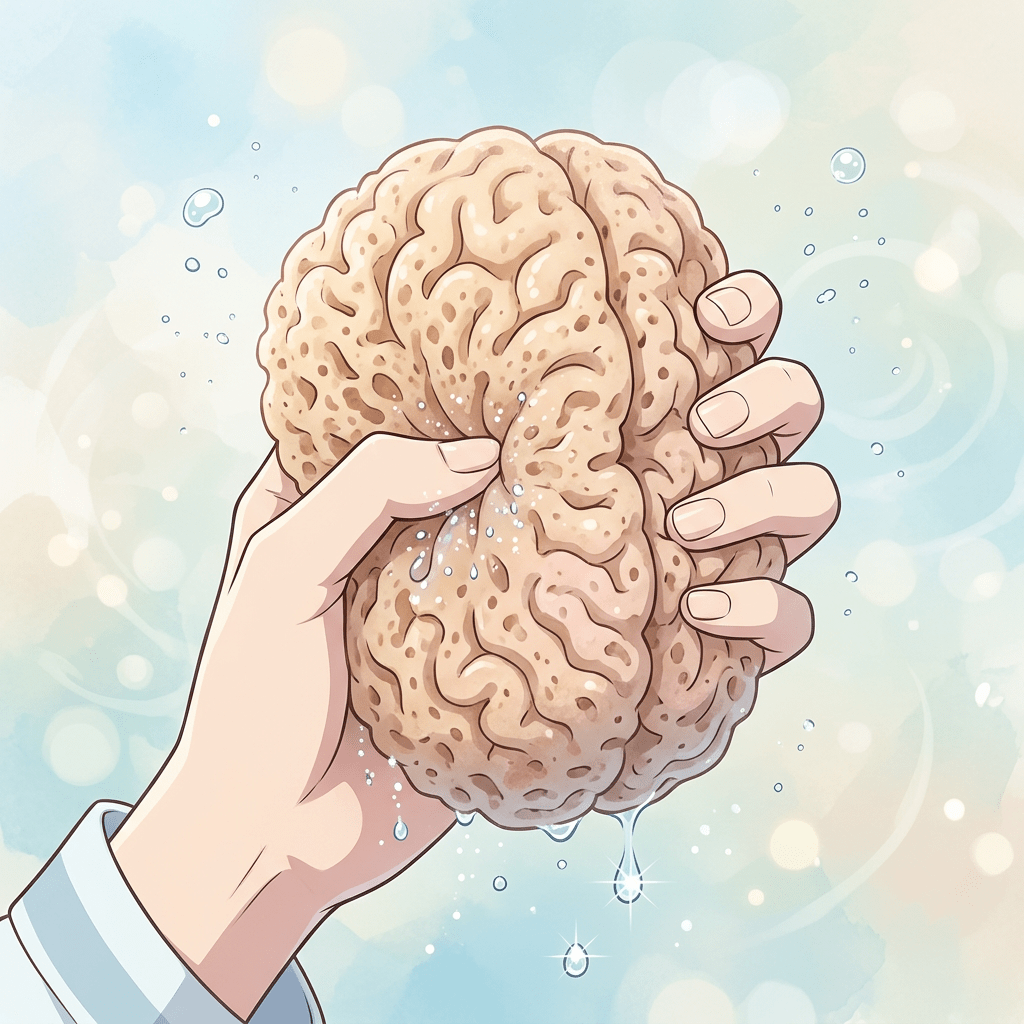
Brain as sponge being gently squeezed

Professor Francesco Costanzo, an expert in fluid mechanics involved in the study, offered a brilliant analogy:

“The structure of the brain is actually like a soft sponge soaked in water. How do you clean a dirty sponge? You don’t just let it sit in a bucket of water. You have to gently squeeze it.”

Every time your core contracts, it gently squeezes that “brain sponge.” This physical shift forces cerebrospinal fluid to rush through the brain’s intricate folds and crevices, flushing out the toxic metabolic waste that disrupts your neurons.

☯️ Ancient Mindfulness Meets Modern Science: The Power of the Belly

Reading this study, I got absolute goosebumps.

For thousands of years, Eastern traditional medicine and mindfulness practices (like Qi Gong and Tai Chi) have passionately advocated for “Abdominal Breathing” (diaphragmatic breathing) and centering one’s energy in the core (the Dan Tian).

Ancient masters didn’t have high-resolution microscopes or computer fluid modeling, yet they deeply understood the body’s mechanics. They knew that rhythmic, deep belly breathing regulates the body’s internal pressure and vital energy. Today, Western peak science has finally validated this ancient wisdom: Changes in abdominal pressure are the literal engine driving your brain’s daily cleaning cycle.

When we slouch in a chair for hours, our core muscles fall completely asleep. The hydraulic pump shuts down. The brain sponge just sits there, trapped in its own debris, quietly accumulating the tiny cellular triggers of neurodegeneration.

The best news from this research? You don’t need to run a ultramarathon or become an Olympic weightlifter to clear your head. The study emphasizes that even the slight core engagement required to stand up from a chair, or the natural core activation of walking, fires up the pump.

💡 My Quick Health Hack for Digital Workers: The next time you’ve been at your computer for too long and your brain feels foggy, don’t reach for another espresso. Try this Brain Reboot Routine:

  1. Get Up and Move: Walk to grab a glass of water. As you walk, consciously engage your core and feel your abdomen lightly pull inward.
  2. Do 3-5 Deep Abdominal Breaths: Inhale deeply, allowing your belly to expand outward. As you exhale, intentionally pull your lower abdomen tightly back toward your spine.

Person running on treadmill inside gym with brain activation and flow diagram

You aren’t doing this to sculpt six-pack abs; you are doing it to activate your internal hydraulic pump, gently shifting your brain inside your skull and flushing away hours of accumulated neurological fog.

True movement isn’t just about the muscles we can see in the mirror—it’s about driving the invisible cleaning pumps that keep our minds sharp.

Listen closely. Your brain is waiting for you to stand up. The next time you catch yourself staring blankly at your monitor, remind yourself: Time to get up and stretch—your brain is waiting for its shower.

Link:https://peacelilysite.com/2026/05/21/ancient-wisdom-meets-modern-fluid-dynamics-how-abdominal-breathing-literally-washes-waste-from-your-brain/

#BrainHealth #Neuroscience #Mindfulness #DiaphragmaticBreathing #HealthyLifestyle #NatureResearch #Biohacking #DeskJobHealth #BrainFog #AlzheimersPrevention
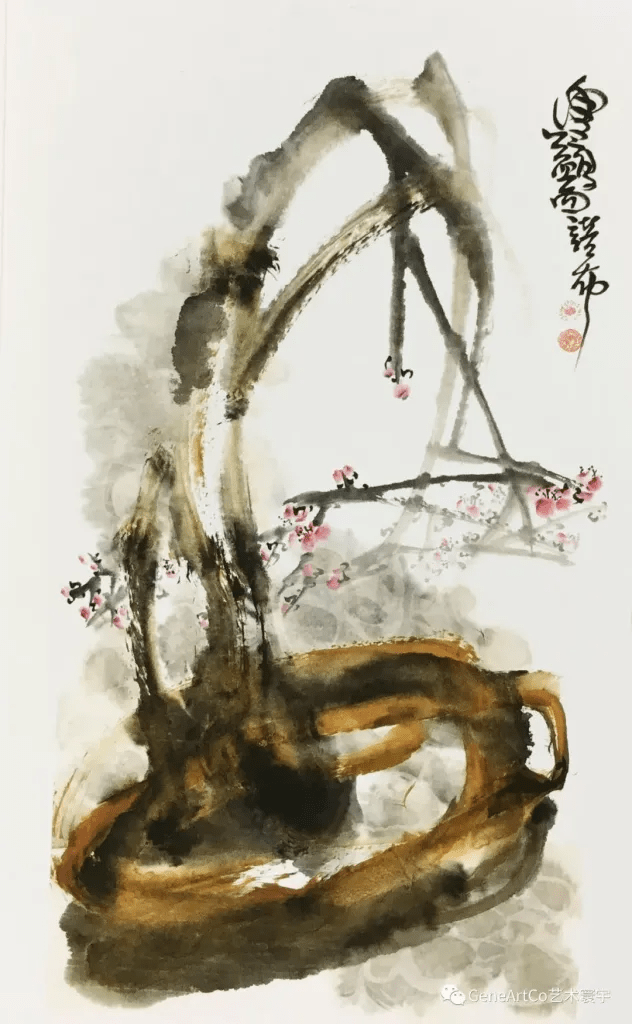
A Plum Blossom Painting Filled with Inner Strength and Serenity

The first time I looked at this plum blossom painting by Dorje Chang Buddha III, I immediately felt a powerful and uplifting energy flowing from it. It was not simply a beautiful painting that pleased the eyes. Rather, it carried a quiet spiritual strength that deeply touched the heart.

My first thought was that only an artist with profound inner calmness, wisdom, and spiritual realization could create such a work.
In traditional Chinese culture, plum blossoms symbolize nobility, purity, perseverance, and courage. Blossoming in the cold of winter, they have long represented the ability to remain graceful and strong amid hardship. Yet this painting expresses those qualities in a particularly extraordinary way.

The entire composition feels free from anything worldly or artificial. There is no trace of stiffness, heaviness, or forced technique. Every brushstroke appears natural, effortless, and alive. The painting possesses a wondrous elegance that cannot be achieved merely through technical skill or years of practice alone. It feels more like the crystallization of wisdom, cultivation, and inner realization.

What especially fascinates me is the unique arrangement of the plum tree itself. The roots twist and coil together, naturally forming what resembles a large bonsai pot. The varying shades of ink create rich layers, flowing movement, and a dreamlike sense of surrealism throughout the painting. The entire scene feels both realistic and ethereal at the same time, blending natural beauty with poetic imagination.

The artist employs the distinctive Chinese painting technique of “flying white” and broken brushstrokes, allowing the branches to pulse with vitality and the force of life. The bold, heavy brushwork gives the sturdy roots the powerful presence of coiled dragons gathering strength before soaring into motion. The entire composition radiates an uplifting sense of righteous energy, while also revealing the artist’s vast, bold, and magnanimous inner world.

What is even more remarkable is that the brushwork appears so simple and effortless, yet every stroke is skillful and full of spirit. Nothing feels excessive, and nothing is unnecessary. It is precisely this simplicity that gives the painting its extraordinary sense of calmness, freedom, and spiritual strength.

After completing the painting, H.H. Dorje Chang Buddha III composed the following poem:

“Plum flowers of surpassing loveliness blossom in a pot, though never are they planted.
Wave the brush to plant the tree, and the roots of that old tree form their own shallow pot.”

The poem perfectly reflects the painting’s natural spontaneity and artistic wonder. The plum blossoms seem not artificially arranged, but born effortlessly from nature itself.

Perhaps this is what makes the painting so moving. Beyond its artistic beauty, it conveys a state of mind — calm yet powerful, simple yet profound, gentle yet filled with inner strength.

In today’s restless and hurried world, such artwork quietly reminds us of something precious: true beauty comes not only from technique, but from the purity, peace, and depth within the artist’s heart.

Link:https://peacelilysite.com/2026/05/14/a-plum-blossom-painting-filled-with-inner-strength-and-serenity/

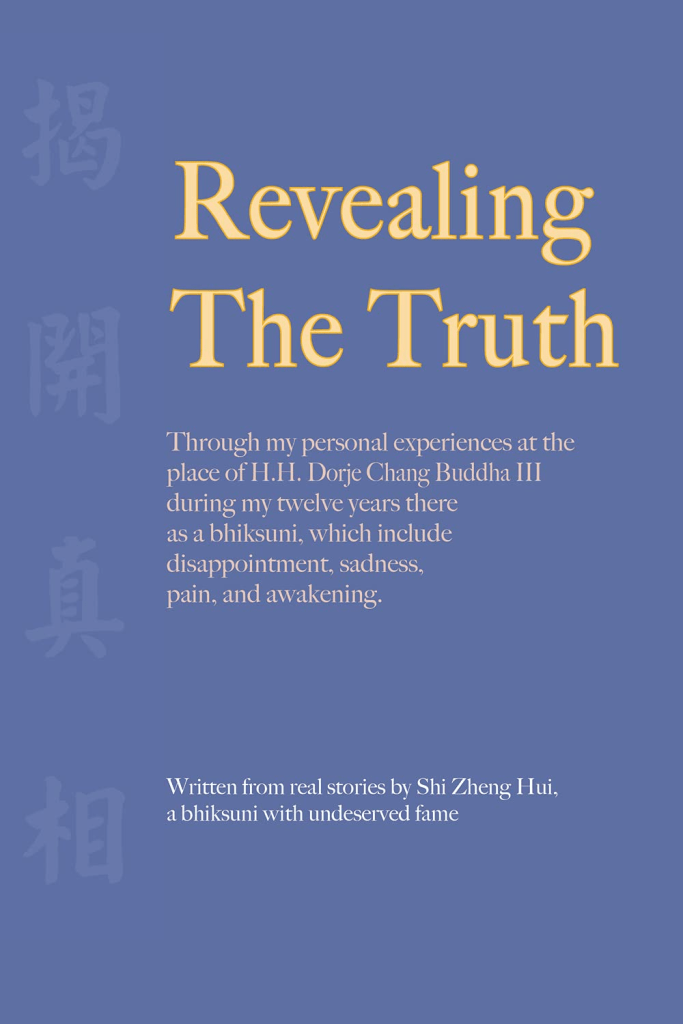
Revealing the Truth — A Book That Inspires Deep Self-Reflection

Revealing the Truth is not merely a collection of Buddhist stories. The book chronicles the personal experiences of a Buddhist nun over twelve years, from 2001 to 2013, while cultivating at the holy home base of H.H. Dorje Chang Buddha III.

Through many real-life experiences, the book quietly reveals the compassion, wisdom, and holiness of Dorje Chang Buddha III, while also helping disciples reflect deeply on whether their own cultivation truly aligns with Buddhist teachings.

What makes this book especially valuable is its sincerity. The stories are not distant theories or abstract teachings, but vivid experiences from everyday life — moments of hardship, karmic tests, spiritual awakening, and personal reflection. As readers follow these experiences, they are naturally led to examine themselves:

Are my thoughts truly compassionate?
Are my words beneficial to others?
Are my actions aligned with the Dharma?
Am I sincerely cultivating, or merely following forms outwardly?

In today’s busy and distracted world, Revealing the Truth serves not only as an inspiring spiritual record, but also as a mirror for sincere cultivators seeking genuine inner transformation.

Among the many fascinating stories in the book, I would like to share one particularly miraculous and thrilling incident.

One day, several disciples accidentally ate a deadly poisonous wild herb after mistaking it for edible Chinese kale. Within minutes, those who had tasted the vegetables began suffering severe dizziness, numbness, blurred vision, and loss of bodily control. Some collapsed to the ground, their faces turning pale gray as though life itself were slipping away.

When H.H. Dorje Chang Buddha III learned what had happened, he immediately recognized the herb as the highly poisonous “Yizhihao,” warning that even a tiny amount could be fatal. Seeing five disciples hovering between life and death, he urgently instructed everyone to induce vomiting. At beginning, none of them could do that. Then, with great solemnity, he snapped his fingers in blessing and loudly called upon the Dharma protectors to rescue the poisoned disciples and restore their consciousness.

What happened next astonished everyone present. Almost immediately, the poisoned disciples began vomiting repeatedly, expelling the toxins from their bodies. Though completely exhausted afterward, all five ultimately survived safely.

Stories like this are what make Revealing the Truth so unforgettable. Beyond the mystery and drama, readers can deeply feel the compassionate care extended toward disciples and the profound spiritual power revealed through ordinary life situations.

Perhaps this is why the book continues to leave such a deep impact on sincere readers — because beneath every story lies a reminder to cultivate more truthfully, more humbly, and more sincerely on the path of liberation.

If you are looking for a book that doesn’t just tell you about Buddhism, but shows you how it breathes in the real world, Revealing the Truth is your next essential read.

The paper copies of the book are available at Buddhist temples or can be purchased online at Amazon.

Link:https://peacelilysite.com/2026/05/12/revealing-the-truth-a-book-that-inspires-deep-self-reflection/

The Body Listens to How We Live

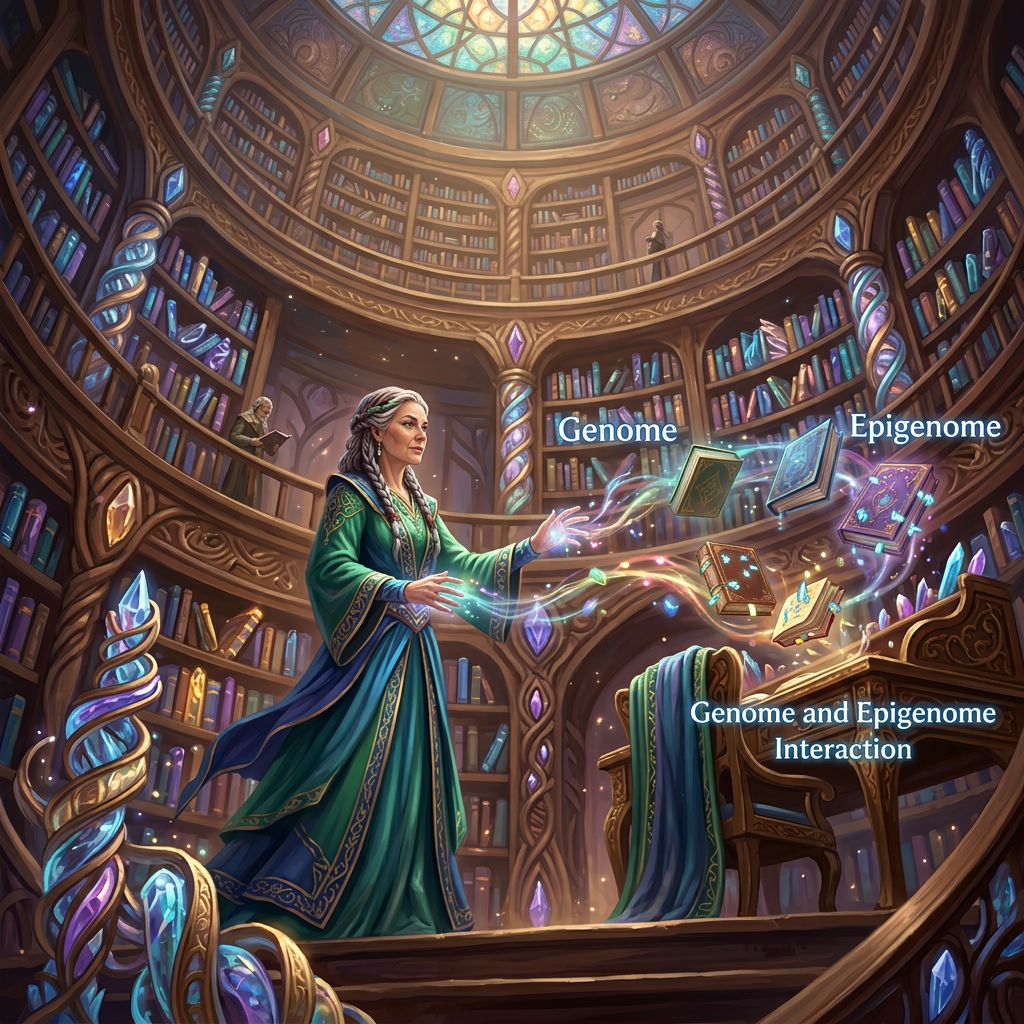
A mage casting a spell to levitate books in a grand circular library filled with glowing crystals

The Life We Live Beneath Our Genes

Sometimes, when illness runs through a family for generations, people quietly carry a hidden fear in their hearts.

“My parents had this disease.”
“My grandparents suffered from it too.”
“Perhaps one day, it will happen to me as well.”

For a long time, science itself seemed to support this worry. We were taught that our genes determined much of our future, as though our health had already been written into the body from the very beginning.

But modern research is beginning to reveal a more hopeful and more compassionate understanding of human life.

In recent years, scientists studying the field of epigenetics have discovered that while our DNA sequence remains largely unchanged, the body possesses another powerful system — the epigenome — that helps regulate how genes behave.

If the genome is like the body’s library of instructions, the epigenome acts more like the librarian, helping decide which pages are opened, which are closed, and which instructions are emphasized or quieted.

This process does not change the genetic code itself. Instead, it involves tiny chemical markers that attach to DNA and surrounding proteins. These markers can influence whether certain genes become more active or less active over time.

Two of the best-known mechanisms are called DNA methylation and histone modification.

DNA methylation occurs when small chemical groups attach to certain regions of DNA, often reducing the activity of nearby genes. Histone modification affects how tightly DNA is wrapped around proteins called histones. When DNA is tightly packed, genes become harder for the body to “read.” When it loosens, those genes may become more active.

What makes this discovery so fascinating is that the epigenome is not completely fixed. It responds continuously to life itself.

DNA double helix surrounded by icons representing exercise, relaxation, nutrition, positive relationships, quality sleep, and stress management for strong immunity
Healthy lifestyle choices positively impact your genes and overall health.

Researchers have found that factors such as nutrition, sleep, stress, exercise, pollution, smoking, emotional health, and even social environment may influence epigenetic patterns over time.

In other words, our bodies are listening to how we live.

This does not mean we can control everything, nor does it mean genetics no longer matter. Some inherited conditions remain powerful and complex. But epigenetics suggests that biology is not simply destiny. The environment we create within and around ourselves may help shape how certain genetic tendencies are expressed.

This is both humbling and deeply encouraging.

It reminds us that health is not built in one dramatic moment.
It is shaped quietly through small choices repeated day after day.

A simple home-cooked meal.
A daily walk.
Enough sleep.
Fresh air and sunlight.
Learning to calm the mind instead of living in constant stress and tension.

These habits may seem ordinary, but science increasingly suggests they can influence the body in profound ways over time.

Modern life often pushes people toward speed, overstimulation, and exhaustion. Many live under continuous pressure, with minds that rarely rest and bodies that rarely recover. Yet the human nervous system was never designed for endless stress.

One of the most hopeful messages from epigenetics is that positive change may still matter greatly, even when there is a family history of disease.

A person may inherit certain risks, but risk is not always certainty.

Good habits cannot guarantee perfect health, but they may help support the body, reduce vulnerability, and improve resilience across a lifetime.

Perhaps this is why simple living has always carried quiet wisdom.

Eat more naturally.
Sleep more deeply.
Move the body regularly.
Reduce unnecessary stress.
Live with greater balance and peace.

The body responds not only to medicine, but also to the way we live every day.

And maybe that is one of the most beautiful discoveries modern science is beginning to confirm:

Our genes may shape the beginning of our story,
but our daily lives continue helping to shape what comes next.

Link:https://peacelilysite.com/2026/05/09/the-body-listens-to-how-we-live/

When Noise Becomes Blindness

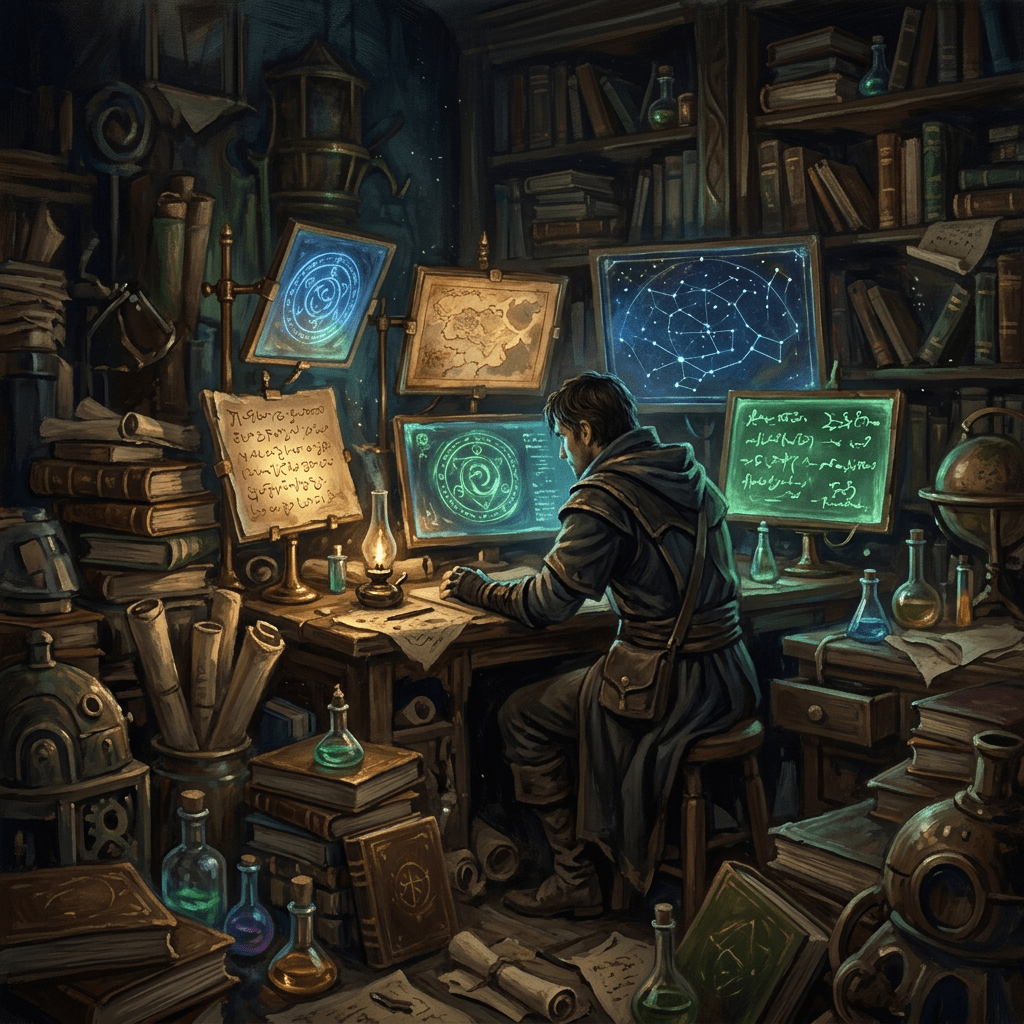
Wizard at desk surrounded by books, scrolls, potions, and magical screens displaying symbols and star constellations

The most dangerous thing is not that we are surrounded by falsehood, but that we slowly lose our desire to seek what is true.

In 1906, Hannah Arendt was born into a world that would soon reveal both the brilliance and the fragility of human society. She later witnessed how a highly educated and cultured nation could slowly lose its clarity, drifting into confusion and darkness.

In her important work, The Origins of Totalitarianism, she reflected on a troubling question:
How do people lose their ability to see what is right in front of them?

Her answer was not simple, but one part stands out quietly and powerfully—when truth becomes unstable, people begin to lose their ability to think clearly.

Today, we may not live in the same world she did, but in some ways, her observations feel closer than ever.

Every day, information rushes toward us from all directions. News, opinions, arguments, videos, headlines—especially on platforms like Facebook, X, and TikTok. Everything moves quickly. Everything competes for attention.

At first, we try to follow.
We read. We watch. We react.

But slowly, something changes.

The more we see, the less certain we feel.
The more voices we hear, the harder it becomes to know which one is true.
Contradictions pile up. Emotions rise. Clarity fades.

And without noticing it, we grow tired.

Not physically tired—but mentally tired.

When the mind is tired, it stops asking questions.
It stops examining.
It stops distinguishing.

We begin to accept things without really understanding them.
Or we reject everything, thinking, “Maybe nothing is true anyway.”

This is a quiet kind of blindness.

Not because we cannot see,
but because we no longer take the time to look carefully.

In her later essay, Truth and Politics, Arendt warned that when truth is constantly distorted, it does more than mislead—it weakens our trust in truth itself. And when that trust fades, something deeper begins to erode: our sense of judgment, responsibility, and even compassion.

This is not a distant problem.
It is something we face every day.

So what can we do?

Perhaps the answer is simpler than we expect, but not easier.

We pause.

We step back from the noise, even for a moment.
We resist the urge to react immediately.
We allow ourselves time to think.

Not quick thinking,
but careful thinking.

We ask:
Is this true?
What is the source?
Am I reacting, or am I understanding?

And just as importantly, we question even the ideas we already agree with.

Real thinking is not comfortable.
It requires patience.
It requires honesty.
Sometimes, it requires us to admit we were wrong.

But this quiet effort is what keeps the mind alive.

In a world filled with endless information, the greatest danger is not that we are misinformed.
It is that we stop thinking altogether.

So, in the midst of all the noise, we can choose something different.

To slow down.
To look carefully.
To think clearly.

And in doing so, we begin to see again.

#OriginsofTotalitarianism#HannahArendt #Germany #TruthandPolitics #Philosophy

Link:https://peacelilysite.com/2026/05/05/when-noise-becomes-blindness/

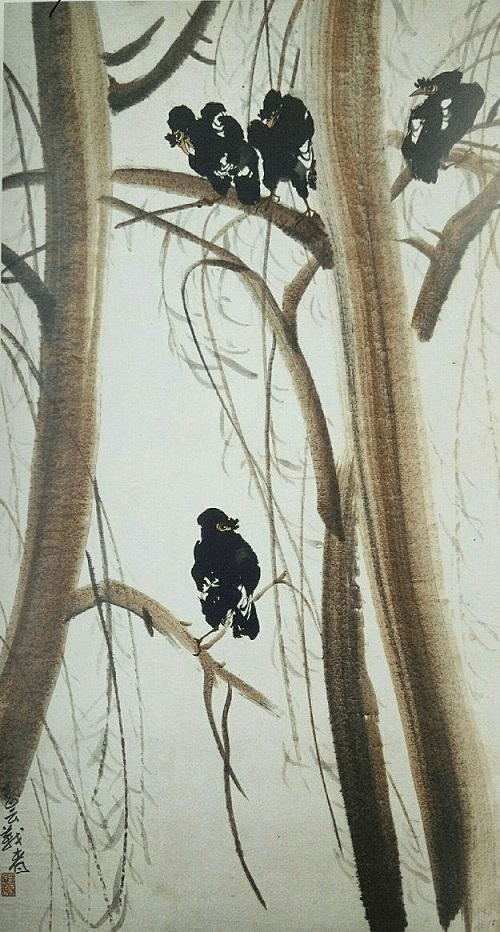
Seeing a World Within Emptiness — An Appreciation of a Lively and Serene Ink Painting

Myna Birds Drunk Among the Willows by H.H. Dorje Chang Buddha III

Some paintings do not rely on complexity to move us. With only a few deliberate strokes, they unfold a world full of life. This fresh and tranquil ink painting is one such work. Quiet and unassuming, it reveals a profound artistic tension and depth within simplicity and stillness.

The composition is anchored by three strong yet supple ink lines. Their texture is rich and full, their force penetrating the paper. They resemble trees, yet are not trees—more like structural forms that divide the flat surface into a grid of interwoven spaces. Within these spaces, branches stretch and intersect, while willow-like lines sway gently, creating a rhythmic sense of motion.

What is most remarkable, however, lies in what is not painted.

The empty spaces are far from void; they are charged with meaning. In these areas of intentional absence, the viewer’s imagination is invited to wander. As the saying goes, “where nothing is painted, there lies the true realm of the painting.” The composition, in its entirety, feels almost like a montage—a sequence of visual moments carefully arranged. From this minimal structure emerges a surprisingly rich and intriguing visual experience.

Bringing the scene to life are several mynah birds, rendered in bold, expressive ink. These small creatures become the focal point of the painting.

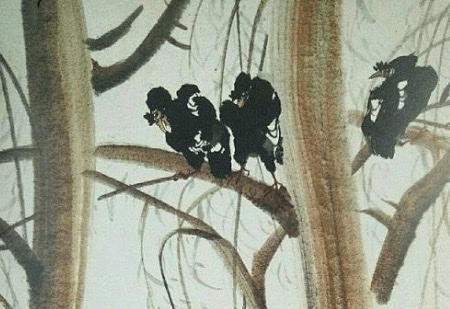
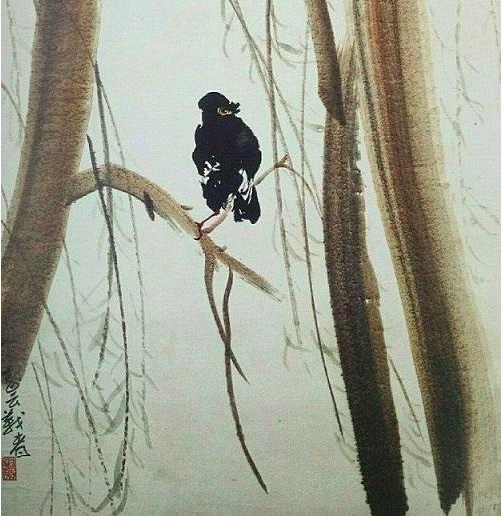
They are divided into three groups, each occupying different sections of the grid. In a small triangular space near the top, three birds gather closely together. The density of life within such a confined area creates an immediate visual tension. In contrast, a large quadrilateral space in the lower middle is occupied by just a single bird, as if it has claimed the entire openness for itself—perhaps even becoming the quiet center of the composition.

Then there is a particularly playful detail: a bird in the upper right seems to occupy the intersection of four spaces at once. Though not placed at the center, it establishes its own presence, as if declaring that even at the edge, one can still become a focal point.

These birds preen their feathers, tilt their heads, hum softly, and seem to communicate with one another. Bathed in a sense of freshness, they revel in the gentle beauty of spring, fully immersed in a life of ease and freedom. The entire painting begins to resemble a small, self-contained paradise.

This delightful and imaginative work is created by H.H. Dorje Chang Buddha III. Art, at its highest level, is not merely a display of technique—it is a reflection of the inner world. A truly great work reveals the artist’s state of mind and spiritual depth.

In this painting, what we witness is not only mastery of brush and ink, but also a sense of calm, freedom, and purity—a state of being that transcends complexity and returns to essence.

The diverse artistic creations of H.H. Dorje Chang Buddha III stand as enduring treasures of human civilization. And this seemingly simple piece gently reminds us:

In a world of endless complexity, true beauty often resides in simplicity—
and true freedom may be found in the space between what is left unpainted.

LinK:https://peacelilysite.com/2026/05/04/seeing-a-world-within-emptiness-an-appreciation-of-a-lively-and-serene-ink-painting/

Your Aura is a Map of Your Soul: The Ancient Chinese Wisdom of “Xiang You Xin Sheng”

A Turn of Thought, A Turn of Fate — A Story of Conscience and Choice

Ever wonder if people can ‘sense’ what you’re thinking? In Chinese culture, we call this ‘Xiang You Xin Sheng.’ It’s the idea that your aura is a mirror of your soul. I found this traditional story particularly striking today, as it shows how changing your mind is the ultimate way to change your luck.

In Chinese culture, there is an ancient proverb: “Xiang You Xin Sheng” (相由心生). While it literally translates to “one’s appearance is born from the heart,” its wisdom goes far deeper than physical beauty.

In this context, “Xiang” (相) refers to much more than just the face; it encompasses one’s “aura,” “vibe,” or the invisible energy one radiates to the world. The teaching suggests that our persistent thoughts eventually sculpt our features and our presence, and this shift in our “countenance” often signals a pivotal turn in our destiny.

There is a traditional story that perfectly illustrates this profound connection between thought, aura, and fate.

Long ago, a wealthy man with no children of his own adopted a young orphan. He raised the boy as his own flesh and blood, providing him with a fine education and teaching him the intricacies of business and integrity. As the boy grew into a young man, he became exceptionally handsome and capable. To any observer, he was the clear heir to a vast fortune.

However, the human heart can be like a dark, fathomless pond. In moments of solitude, a shadow began to creep into the young man’s mind: “Since all of this will eventually be mine, why shouldn’t I have it sooner?”

At first, this thought was a mere spark. But over time, it began to smolder. It subtly changed his “Xiang”—his once-clear eyes grew clouded with a trace of calculation, and his once-welcoming aura took on a subtle edge of coldness.

One day, a guest skilled in the ancient art of physiognomy (face reading) visited the house. After observing the young man, the guest whispered to the father: “This young man’s spirit is darkened. There is a hidden greed between his brows. He may harbor betrayal in his heart; you must be on your guard.”

The young man happened to overhear this from behind a wall. In that moment, he felt as though he had been struck by lightning. He wasn’t angry at being insulted; he was terrified of being seen. He realized that his inner “vibe” had betrayed him—the “thief” in his heart had indeed been lurking there for a long time.

“My father has treated me with the kindness of a mountain, yet I covet his life and wealth. How am I different from a beast?” he thought. This intense shame acted like a mirror, reflecting the stains on his soul. In that instant, he made the most important decision of his life: he would cut off his greed, leave his comfortable home, and find his true, clean self again.

He bid farewell to his father and set out to make his own way. Not long after, while traveling a lonely path, he found a heavy pouch filled with gold and silver—enough wealth to change a man’s life instantly.

In the silence of the wilderness, with no one watching, the old greed flickered for a second. But he immediately remembered the shame and the awakening he had experienced. Instead of taking the pouch, he waited. He stood his ground from noon until dusk, until a frantic traveler appeared, searching in despair for his lost property.

Young man giving a bag labeled GOLD to an elderly woman crying with gratitude

When the young man returned the wealth, the owner was moved to tears. Impressed by such rare integrity, the traveler used his influence to recommend the young man for a prestigious and honorable career. From that point on, the young man no longer relied on an inheritance. Through his own hard work and “righteous spirit,” he built a life of genuine dignity and peace.

Years later, when people spoke of him, they saw a man with a gentle face and a clear, peaceful aura. The gloom of his youth had vanished. He finally understood that what changed his fate wasn’t the bag of gold or the new job; it was the moment he chose to face his own inner ugliness and personally extinguish the fire of greed.

The turning points in our lives rarely happen during grand, public moments. They happen in the silent depths of the heart. One thought can lead a person into an abyss; one shift in thought can lead them back to the light.

We cannot guarantee that we will never harbor a dark thought, but we can choose—the moment we become aware of it—not to follow where it leads.

As the old wisdom teaches: Good and evil exist within a single thought. And destiny? It often waits at the corner of that very same thought, ready to turn your life in a whole new direction.

#Mindfulness #AsianCulture #SelfImprovement #ChineseWisdom#AsianPhilosophy #TraditionalCulture#Chinesestories #Chinesetraditionalconcepts

Link:https://peacelilysite.com/2026/05/04/your-aura-is-a-map-of-your-soul-the-ancient-chinese-wisdom-of-xiang-you-xin-sheng/

Awakening Life in the Deep: An Appreciation of Deep Sea Purple Moss

Among many spiritually expressive works of art, Deep Sea Purple Moss stands out for its simplicity and depth, offering viewers a striking, almost visceral impact. This Western-style painting by H.H. Dorje Chang Buddha III may appear abstract at first glance, yet it carries profound reflections on life and inner awakening.

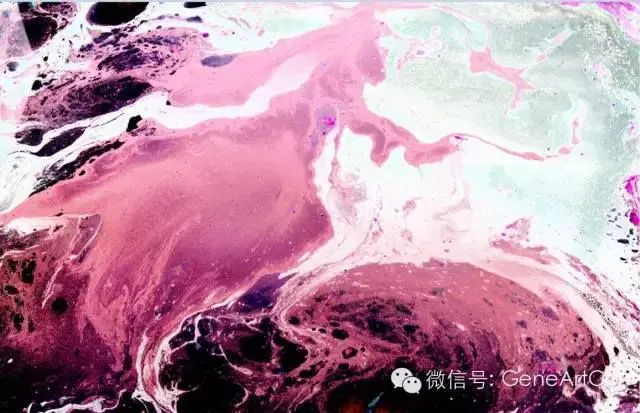
The entire composition is built from just three colors—black, white, and purple—yet it reveals remarkable layers and tension. The black areas resemble a boundless deep sea, mysterious and unfathomable, as if there is no visible end. This depth evokes a sense of stillness infused with latent power. This “black” not only represents the unknown world but also symbolizes the unpredictable circumstances and challenges we encounter in life.

In contrast, the white surges forward like rolling waves, powerful and unstoppable. It breaks the silence of the black, injecting movement and dramatic force into the scene. These waves seem to echo life’s turbulence—the sudden changes, hardships, and trials that compel us to confront reality head-on.

Most captivating is the vibrant touch of purple. Like sea moss growing in the depths, it persists between waves and currents, embodying a resilient and vigorous life force. Here, purple is more than a visual accent; it becomes a symbol—of endurance, of hope, and of life’s ability to thrive even in adversity.

As we contemplate this painting, we begin to see that it is not merely a depiction of the sea, but a reflection of life itself. The black deep sea represents the environment we live in; the white waves, the challenges we must face; and the purple “moss” represents who we are.

In an ever-changing world, we cannot choose every circumstance, but we can choose how we respond. Just like the purple life form in the painting that continues to grow amid stormy waters, we too must learn to adapt, to temper ourselves through trials, and to seek upward strength even in difficult situations.

With its minimalist form, this work conveys a profound truth: true growth is not gained in calm waters, but forged in the midst of surging waves.

Perhaps, the next time we face the “great waves” in our own lives, we may remember this purple moss in the deep sea—growing upward, even in the darkest depths.

Link:https://peacelilysite.com/2026/04/30/awakening-life-in-the-deep-an-appreciation-of-deep-sea-purple-moss/

The Water-Splashing Festival: Where Tradition, Faith, and Renewal Meet

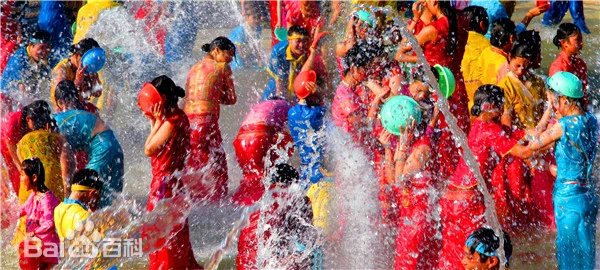
Every year in mid-April, the streets of Xishuangbanna and Dehong in Yunnan, China transform into a vast ocean of water.

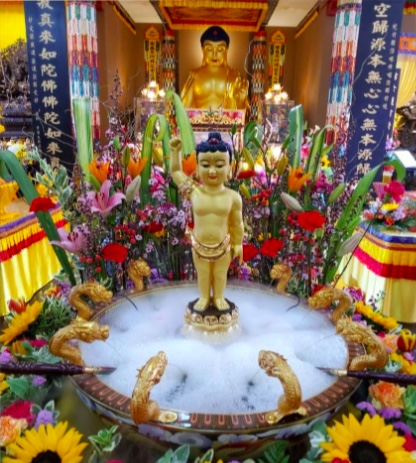
To many, the Water-Splashing Festival is simply a joyful, all-out “water fight.” But what is often overlooked is that this grand celebration does not begin with noise or excitement—it begins with a single, quiet drop of perfumed water falling gently on the shoulder of a Buddha statue.

Today, let us step into Sangken Bimai—the New Year shared by the Dai, De’ang, and Blang peoples—and discover how traditional Chinese folk customs and Buddhist culture come together, blending seamlessly through the gentle yet powerful symbolism of water.

“Sangken Bimai” in the Dai language means “the turning of the New Year.” Its roots trace back to Sankranti, a Sanskrit term meaning “transition” or “passage,” tied to ancient Indian calendrical and religious traditions. With the spread of Theravada Buddhism, this observance took root across Southwest China and Southeast Asia, gradually evolving into a festival rich in both spiritual and cultural meaning.

Before the streets erupt in splashing water, every temple begins with a solemn and tranquil ritual: bathing the Buddha.

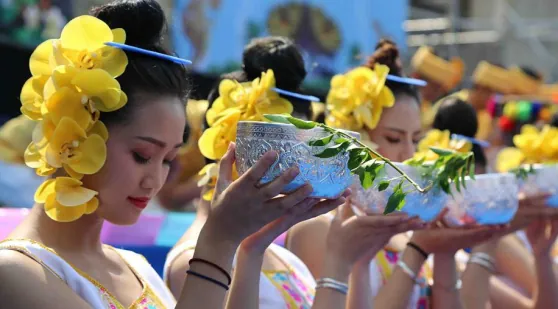
Devotees gather fresh flowers, soak their petals in clean water, and create a lightly scented infusion. One by one, they approach the Buddha statue, gently pouring the water over it with branches or cupped hands, symbolically washing away dust.

In this moment, there is no noise—only reverence.

This act is not merely an offering of respect to the Buddha; it is also a ritual of inner purification. It represents washing away the greed, anger, and ignorance accumulated over the past year, allowing the heart to return to clarity and light as the new year begins.

The Water-Splashing Festival typically lasts three to four days. While details vary by region, the structure follows a meaningful progression—from letting go of the old, through transition, to welcoming the new.

Day One: Farewell to the Old Year
This day resembles New Year’s Eve.

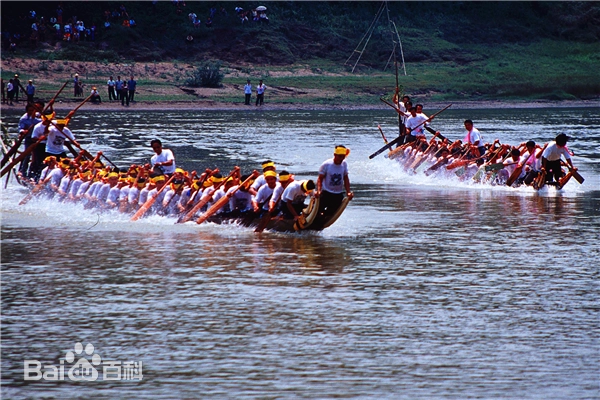
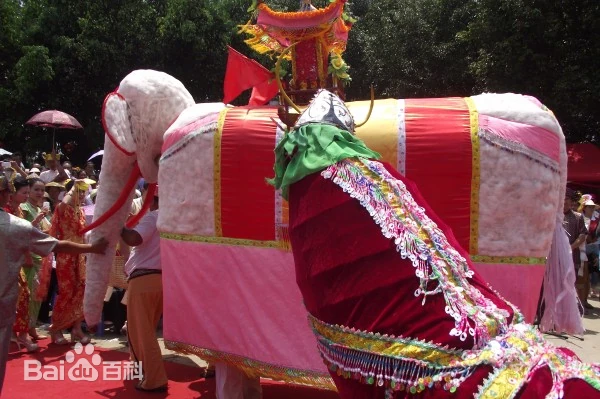
Along the Lancang River, dragon boats race across the water, sending waves splashing into the air. “Rising rockets”—traditional homemade fireworks—shoot skyward, carrying people’s wishes with them. Dressed in festive attire, people gather at lively markets filled with laughter and celebration, bidding farewell to the passing year.

Day Two: The Day Between Time
This is a deeply symbolic day—belonging neither to the old year nor yet to the new.

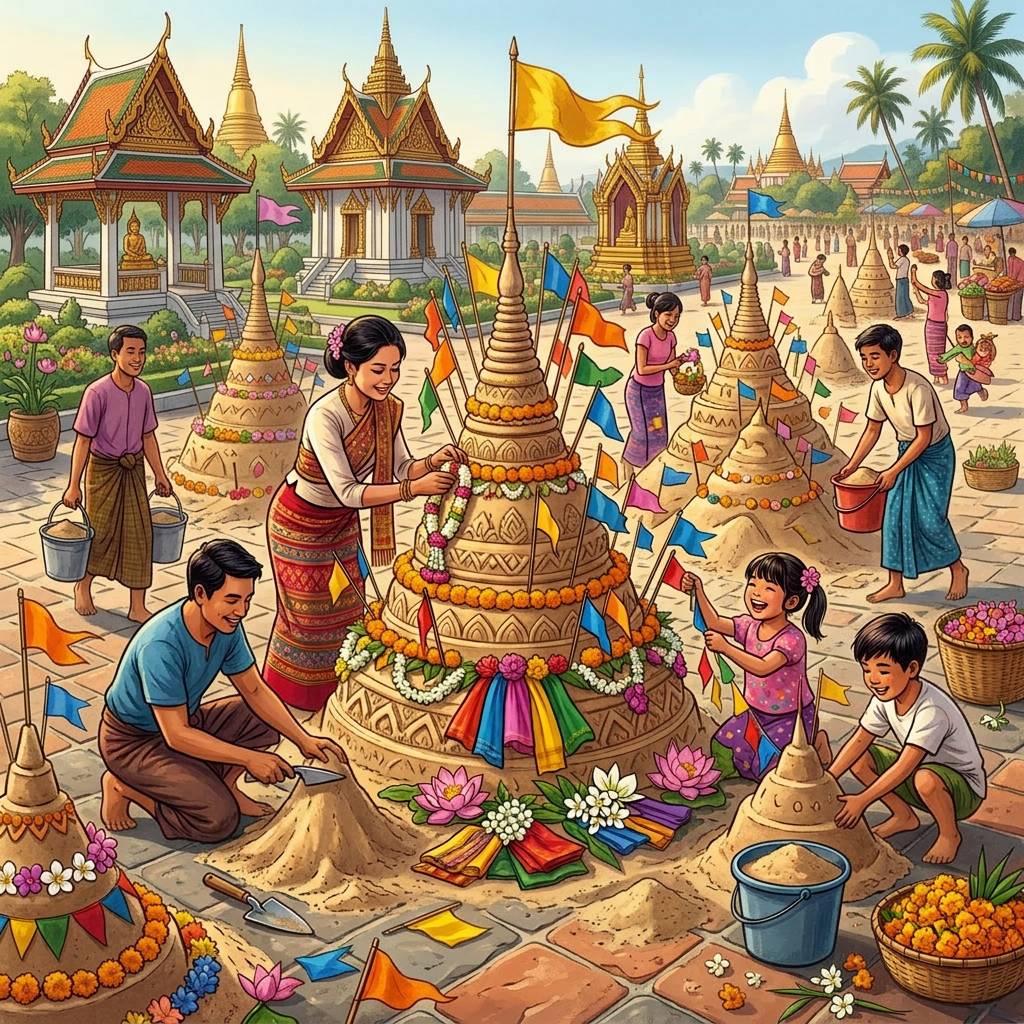
People building and decorating sand pagodas with flags and flowers on a beach during a festival

People visit temples to build sand stupas, shaping fine white sand into small pagodas adorned with colorful flags and flowers. Each grain of sand represents a good deed or kind thought.

This act of merit-making expresses hopes for favorable weather, peace, and stability in the coming year.

Day Three: Blessing and Rebirth Through Water
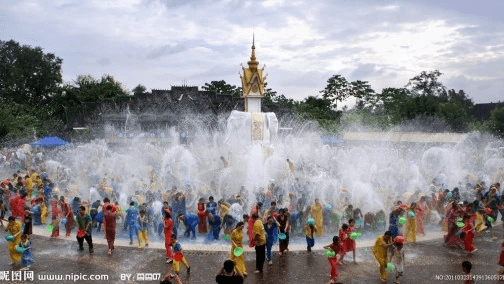
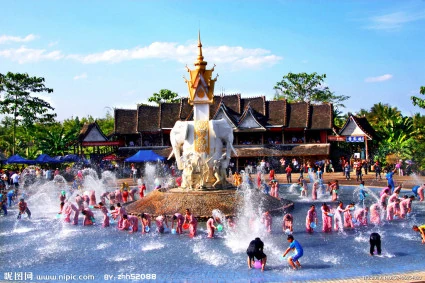
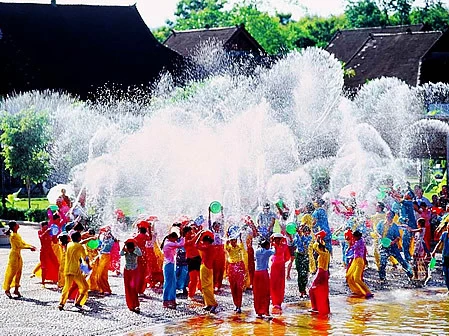
The first day of the New Year begins again with the Buddha-bathing ritual, followed by the festival’s most exuberant moment—water splashing.

For elders, water is gently poured over the shoulders as a sign of respect and blessing. Among peers and younger generations, however, the mood shifts into joyful abandon—buckets, basins, and water guns come into play, and laughter fills the air.

The more water, the deeper the blessing.

At this point, water is no longer just water—it becomes a tangible expression of good fortune and joy, symbolizing the washing away of the past and the arrival of new life.

A Celebration of Culture and Spirit

The Water-Splashing Festival is not only a holiday—it is a vibrant expression of culture.

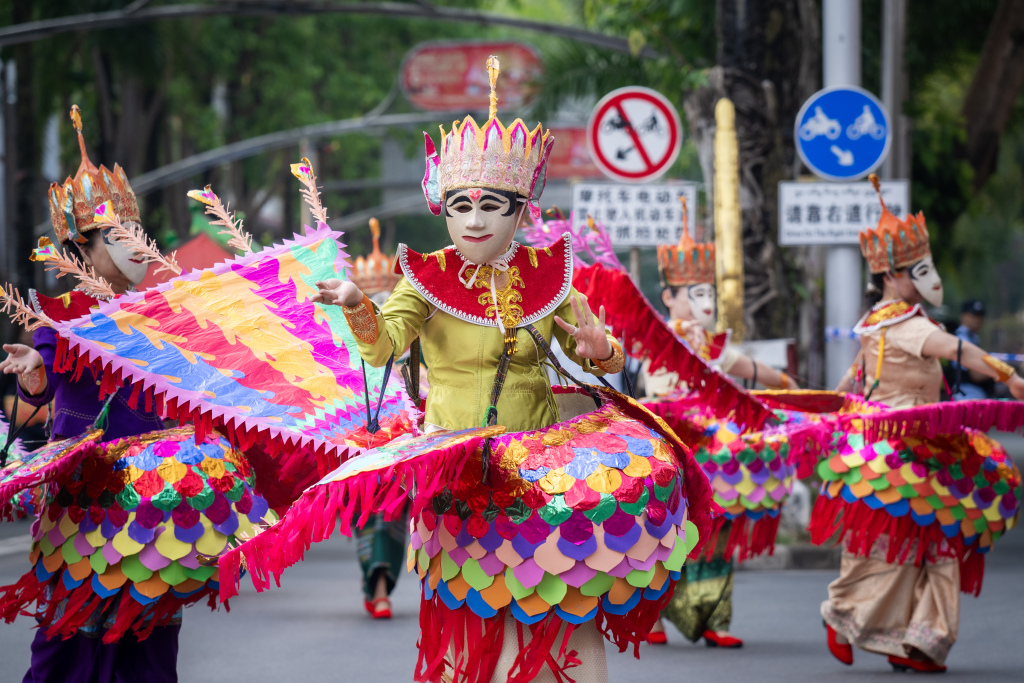
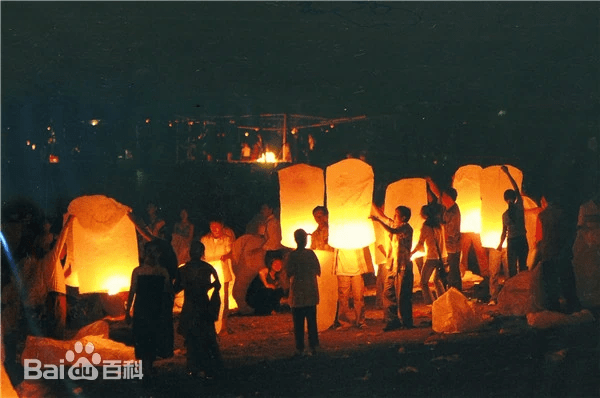
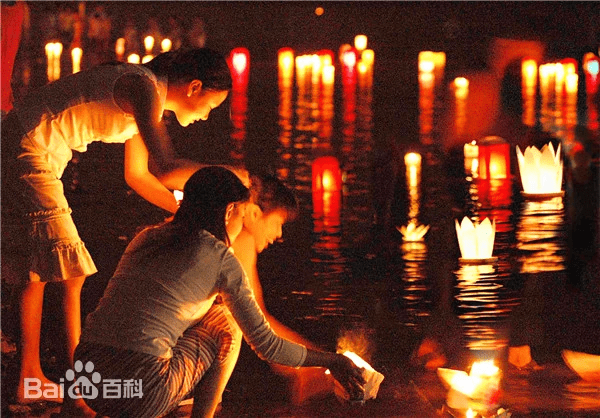
The rhythmic beat of elephant-foot drums echoes like thunder, while the graceful peacock dance reflects harmony between humans and nature. As night falls, people release floating lanterns onto rivers and send sky lanterns drifting into the night, symbolizing the release of misfortune and the rising of hope.

IP上海 代傲辰 图

In these moments—both dynamic and still—people express reverence for nature and heartfelt wishes for the future.

One Drop of Water, A Shared Cultural World

This festival does not belong to Yunnan alone.

Across Southeast Asia, it appears under different names, yet carries the same cultural essence.

In Thailand, Songkran is not only about water—it is a time of gratitude and family connection. Younger generations gently pour scented water over the hands of elders to receive blessings, while also participating in merit-making rituals such as building sand stupas. Bright floral shirts have become a modern symbol of the celebration.

In Myanmar, the festival—known as Thingyan—has an especially strong spiritual atmosphere. Many people observe periods of fasting, visit temples, or even temporarily ordain as monks to welcome the New Year with purity and reflection. Traditional foods, such as soaked rice infused with fragrant water, are prepared, while large city celebrations feature grand stages where water is sprayed over joyful crowds.

Though names and customs vary, they all trace back to the same origin—Sankranti, marking not only the passage of time, but the renewal of life.

From the valleys of Yunnan to the cities of Southeast Asia, this single drop of water travels across geography and culture, quietly connecting the entire region.

It begins in stillness before the Buddha, and flows into laughter among people.
It symbolizes both letting go and renewal—purification and blessing.

What makes the Water-Splashing Festival so moving is not merely its liveliness, but what it reveals:

Even in the simplicity of everyday life, people continue to express kindness, cherish life, and hold hope for the future in the gentlest of ways.

A drop of water falling on the Buddha’s shoulder is an act of practice.
A splash of water shared among people is a blessing.

And when that water flows through the heart, perhaps what is truly cleansed…is ourselves.

Link:https://peacelilysite.com/2026/04/30/the-water-splashing-festival-where-tradition-faith-and-renewal-meet/

A Golden Bowl and an Awakened Heart — A Story of Awareness and Transformation

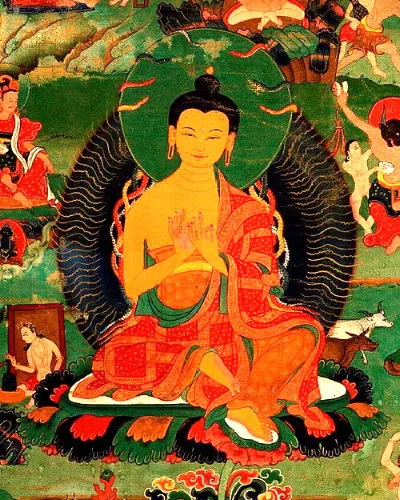
Nāgārjuna was a great Buddhist master from ancient India, widely respected as a profound philosopher and teacher who illuminated the path of wisdom and emptiness. Known for his deep insight and compassionate guidance, he helped many turn their minds toward awakening.

There is a story often told about him:

Nāgārjuna lived a simple and pure life, traveling from place to place, guiding others with wisdom.

One day, he arrived in a prosperous kingdom. The queen, a devoted follower of the Dharma, was overjoyed to hear of his visit. She had a beautiful golden bowl specially made, inlaid with precious jewels, and offered it to him with great respect.

When Nāgārjuna entered the city on his alms round, the queen personally presented the golden bowl. He accepted it calmly, without excitement or attachment, just as he would accept any ordinary offering.

Carrying the bowl, he quietly left the city and returned to a dilapidated hut where he was staying.

A thief saw everything.

He thought to himself, “Such a valuable bowl in the hands of a man who lives with nothing—how long can he keep it? If someone is going to take it, why not me?”

So he followed Nāgārjuna in secret.

As night fell, Nāgārjuna returned to his crumbling shelter. There were no doors, no roof—hardly a place anyone would visit.

The thief hid nearby, waiting for the right moment, planning to act once the master fell asleep.

After finishing a simple meal, Nāgārjuna gently placed the golden bowl outside, in a visible spot, and then sat down quietly.

The thief was stunned. He had not expected this.

After hesitating, he stepped forward and asked softly, “Aren’t you afraid someone will take your bowl?”

Nāgārjuna looked at him calmly and said, “Since you are already here, why hide? If you need it, you may take it.”

The thief was taken aback and found himself unable to reach for it.

“Do you not know how valuable this is?” he asked.

Nāgārjuna smiled gently. “If the mind is bound by it, even something precious becomes a burden. If the mind is not attached, even something simple is enough.”

The thief fell silent for a long moment, then said, “If you can see a golden bowl this way, then what you have must be far more valuable. Can you teach me?”

Nāgārjuna nodded. “Yes. But first, you must learn to observe your own mind.”

“How do I do that?” the thief asked.

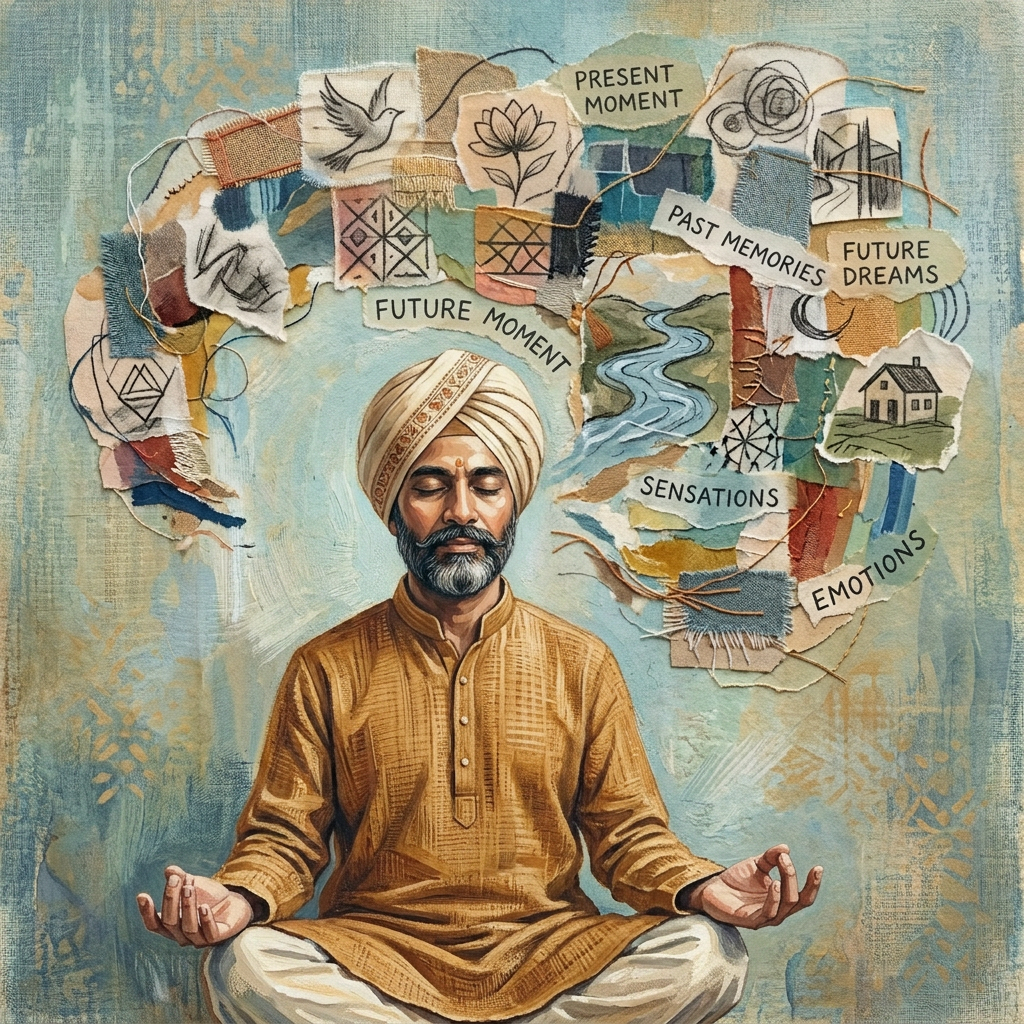
“When a thought arises—whether of desire, grasping, or wanting to take something—simply be aware of it clearly. Do not follow it, do not suppress it, do not act on it. Just see it as it is.”

“That sounds easy,” the thief said.

“It sounds easy,” Nāgārjuna replied, “but it is not.”

The thief agreed to try.

Person meditating with illustrated thoughts about present moment, past memories, future dreams, sensations, and emotions

When he next attempted to steal, he began to watch his own thoughts. Yet each time he clearly saw the moment of greed arise, something within him shifted. His hand could no longer move forward.

Again and again, he tried—but whenever awareness was present, the urge lost its force.

After some time, he returned to Nāgārjuna, empty-handed.

“I can no longer steal,” he said quietly. “The moment I truly see my thoughts, the desire disappears.”

Nāgārjuna looked at him and said, “It is not that you have lost something. It is that you have begun to see clearly.”

Tears filled the thief’s eyes. “I once believed that gaining more would bring satisfaction. Now I see that when the mind becomes still, the peace and ease I feel are greater than any wealth.”

He knelt and said, “Please allow me to follow you and learn.”

Nāgārjuna replied, “The moment you are willing to face your own mind, your practice has already begun.”

This story has been passed down not to suggest that one should ignore right and wrong, but to remind us:

True transformation does not come from force, but from clear awareness.
True letting go is not merely giving things up, but releasing attachment in the heart.

When we begin to truly see our own minds, many attachments naturally fall away. And perhaps, the real turning point begins the moment we are willing to truly see ourselves.

Link:https://peacelilysite.com/2026/04/27/a-golden-bowl-and-an-awakened-heart-a-story-of-awareness-and-transformation/