What if a frightening encounter could become the beginning of a spiritual awakening? What if the actions we take today could change the course of our future?
An ancient Buddhist parable offers a thought-provoking answer.
According to A Collection of Various Parables from the Sutras (Zhongjing Zhuan Za Piyu, Volume Two), long ago, Śakra, the ruler of the Trāyastriṃśa Heaven, and the Great Brahmā King were close friends.
One day, the Great Brahmā King visited Śakra and found him deeply troubled.
“Why are you so unhappy?” he asked.
Śakra replied, “When heavenly beings exhaust their accumulated heavenly blessings, they must be reborn elsewhere. If they have not cultivated goodness and accumulated merit, they may fall into the lower realms and suffer. I see fewer and fewer beings cultivating virtue, while more seem to be heading toward suffering. How can I not be worried?”
Moved by his friend’s concern, the Great Brahmā King proposed a plan.
“Let us descend to the human world to guide people toward goodness. You can transform yourself into a fierce lion, and I will appear as a Brahmin. Together, we can teach people the Dharma and encourage them to cultivate virtue and accumulate merit.”
The two heavenly kings then descended to a small kingdom.
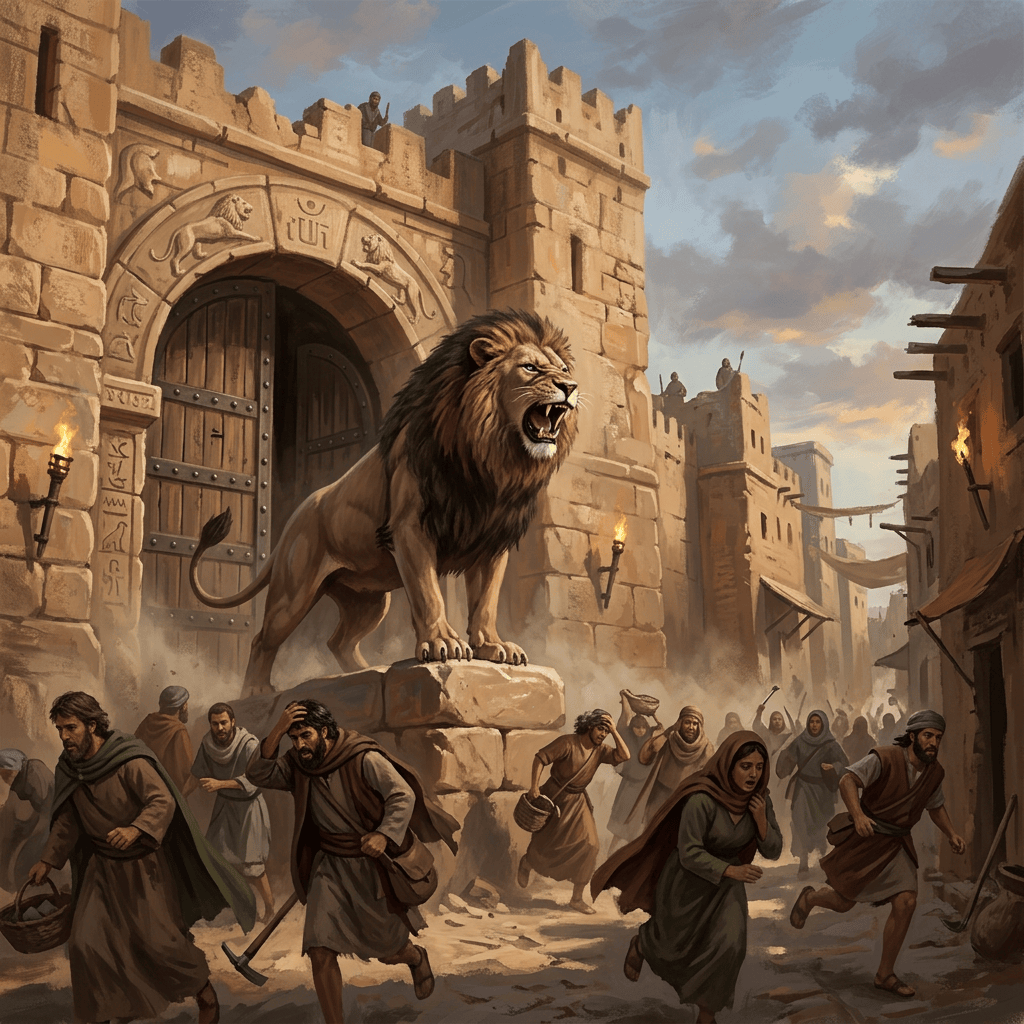
Śakra, transformed into a mighty lion, appeared at the city gate and roared, “I want to eat people!”
The terrified citizens had no idea what to do. The Brahmin, who was actually the Great Brahmā King in disguise, offered a solution: “Why not give the lion thirty prisoners who have already been sentenced to death? Perhaps then it will leave the city alone.”
The people accepted his suggestion, and the thirty prisoners were handed over to the lion.
Instead of devouring them, however, the lion drove them into the mountains.
There, Śakra appeared in human form and offered the prisoners a way to save their lives.
“If you sincerely take refuge in the Three Jewels—the Buddha, the Dharma, and the Sangha—observe the Five Precepts, and practice the Ten Virtuous Deeds, purifying your actions of body, speech, and mind, the lion will spare you.”
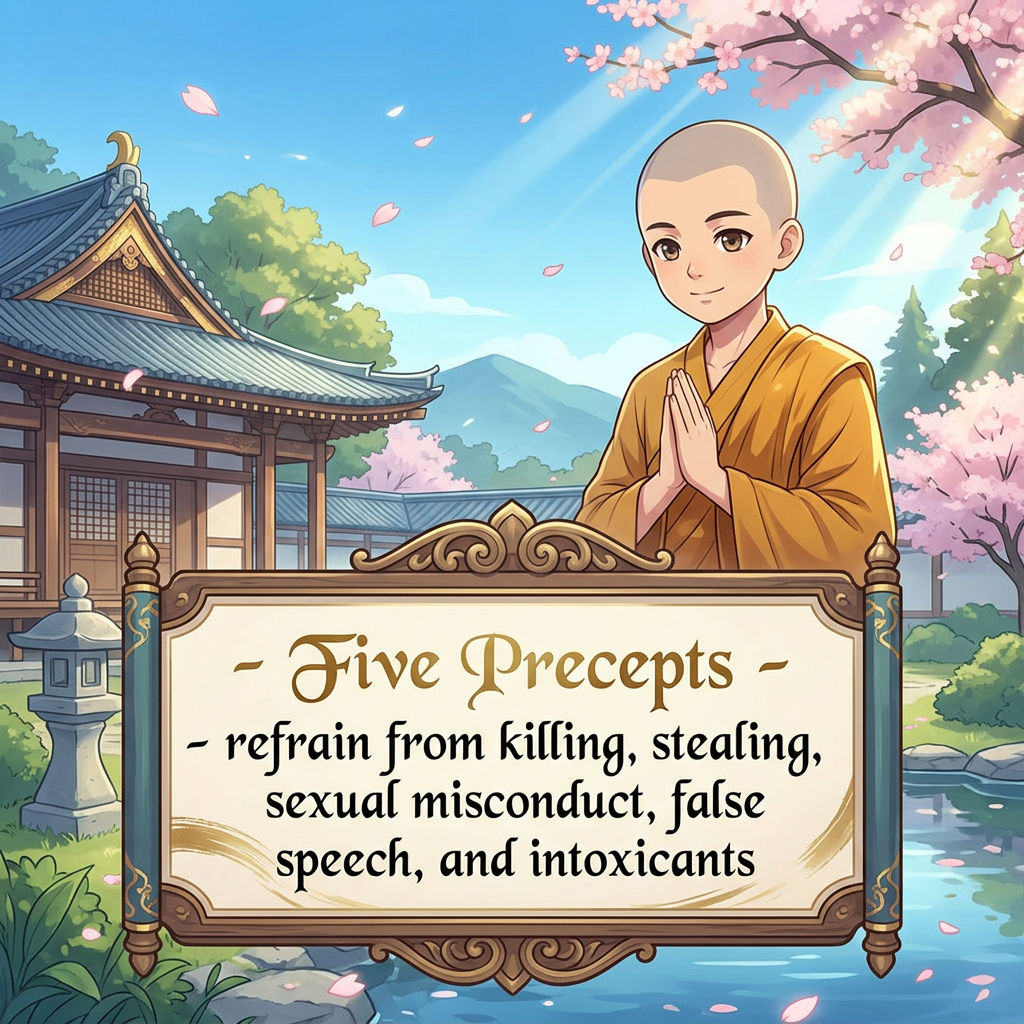
Desperate for a second chance at life, the prisoners sincerely accepted his guidance. They took the Five Precepts and resolved to practice the Ten Virtuous Deeds.
True to his word, the lion did not harm them. Instead, he released them and allowed them to return home.
The lion warned them, however, that if they abandoned their virtuous conduct and failed to cultivate goodness, he would return.
One Person’s Transformation Can Inspire Many
When the thirty prisoners returned safely, the people were astonished. They asked how they had escaped the lion.
The former prisoners explained that a wise spiritual teacher had taught them to take refuge in the Three Jewels, observe the Five Precepts, and practice the Ten Virtuous Deeds. Through this encounter, they had found a path toward a better life.
Before long, the lion returned to the city.
Once again, the people were terrified. Remembering what had happened to the thirty prisoners, many came forward to receive the precepts and practice virtuous deeds.
The Great Brahmā King, appearing as the Brahmin, and Śakra, appearing as the lion, continued their journey through more than eighty thousand kingdoms, guiding countless people toward goodness.
According to the parable, those who cultivated virtue and accumulated merit during their lives would enjoy favorable rebirths and heavenly blessings after death.
The story concludes with the Buddha explaining its deeper significance to Ānanda.
Śakra, who had appeared as the lion, was the Buddha himself in a former life. The Great Brahmā King, who had appeared as the Brahmin, was Mahākāśyapa, one of the Buddha’s great disciples.
Because Mahākāśyapa had helped him guide countless beings toward the Dharma in that former life, the Buddha later honored him by sharing his seat with him. This gesture expressed gratitude for the assistance he had received on the path of benefiting living beings.
What Can We Learn From This Story Today?
At first glance, this parable may seem to be about a frightening lion and a miraculous escape from death. But its deeper message is about the power of moral transformation.
In Buddhism, our actions matter. What we do, say, and think shapes our character and influences the direction of our lives. Although we cannot control every circumstance we encounter, we can choose how we respond and what kind of person we become.

The Five Precepts encourage us to refrain from killing, stealing, sexual misconduct, false speech, and intoxicants that lead to heedlessness. The Ten Virtuous Deeds further encourage us to avoid harmful actions and cultivate goodness through our body, speech, and mind.
These teachings are not merely ancient religious rules. They offer practical guidance for living with greater honesty, compassion, self-discipline, and respect for others.
We may not encounter a fierce lion at our city gates, but we face challenges every day. Anger can threaten our relationships. Greed can lead us to make harmful decisions. Jealousy and resentment can rob us of peace. Dishonesty may bring temporary advantages but gradually erode trust.
Each moment offers us a choice: to follow our impulses or to cultivate wisdom and goodness.
The story also reminds us that one person’s transformation can inspire an entire community. When the thirty prisoners returned home with a new understanding of virtue, their experience encouraged others to change. In the same way, a person who lives honestly, treats others with compassion, and acts responsibly can influence a family, a workplace, and even a wider community.
We do not always need grand gestures to make a difference. Sometimes, a kind word, an honest decision, a willingness to forgive, or a helping hand is enough to plant a seed of goodness in another person’s heart.
Finally, the Buddha’s gesture of sharing his seat with Mahākāśyapa offers another valuable lesson: never forget the kindness of those who help us grow. Gratitude is not merely a feeling; it is something we demonstrate through our actions and our willingness to help others in return.
We cannot know everything the future holds, but we can begin shaping it through the choices we make today.
Perhaps the most important question is not simply whether we will receive blessings in the future, but whether we are cultivating the causes of a wiser, kinder, and more compassionate life right now.
Every good thought, every honest word, and every compassionate act is a seed. We may not see its fruit immediately, but no sincere effort toward goodness is wasted.

If we wish to change our destiny, perhaps the best place to begin is with ourselves.


