In a world driven by metrics, social validation, and external applause, it is easy to mistake the platform we stand on for our own height.
A striking story from the Miscellaneous Parables Sutra (雜譬喻經) serves as a timeless reminder of what happens when we rely on borrowed support—and how genuine self-correction and gratitude can transform our lives.
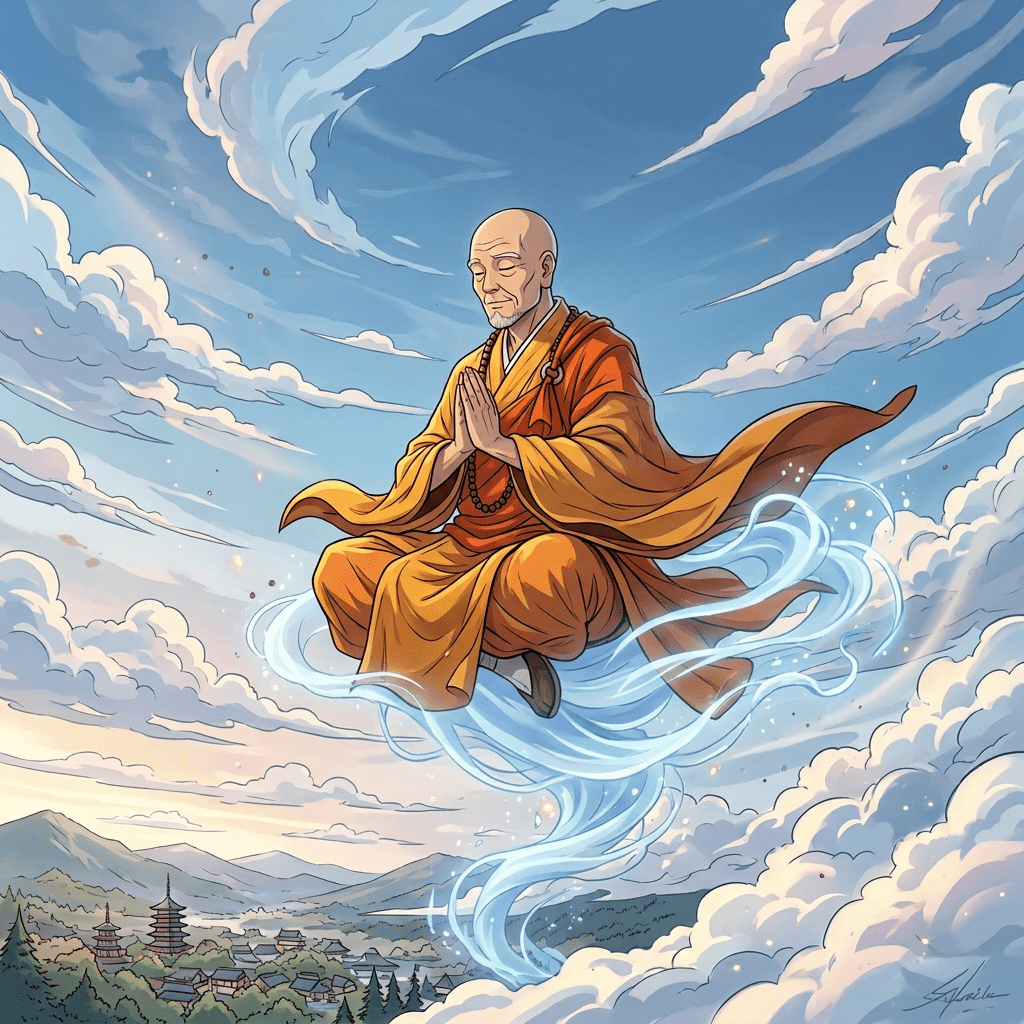
The sutra tells of a monk expelled from his monastic community after committing a serious infraction. Cast out into the cold, he did not spend his solitude reflecting on his actions or feeling genuine remorse. Instead, he was consumed by anxiety, lamenting his lost veneration, the vanished daily offerings, and his ruined reputation.
During his aimless wandering, he encountered a ghost who was similarly miserable, having been banished by Vaisravana, the Heavenly Guardian King. Recognizing a shared plight, the ghost proposed a clever scheme:
“I am invisible to human eyes. I will lift you up and carry you on my back through the sky, creating the illusion that you are an enlightened saint who can fly. When the villagers marvel at your supernatural powers and shower you with rich offerings, we will split the rewards.”
The monk eagerly agreed to the trick.
When the villagers looked up and saw the monk floating effortlessly above their heads, they were stunned. Outraged at what they assumed was a grave mistake, they openly criticized the monastic community for exiling a “holy, enlightened master.” The villagers welcomed the monk back with grand celebrations, lavishing him with honor, luxury, and prestige.
Everyone marveled at how high he could fly, but not a single soul saw the invisible ghost holding him up from underneath.
The grand deception came to a sudden, tragic end. One day, while gliding majestically through the clouds above an admiring crowd, the ghost caught sight of Vaisravana’s celestial guards patrolling the sky. Panic-stricken, the ghost fled instantly to save itself, dropping the monk mid-air.
Deprived of his hidden foundation, the monk plummeted straight to the earth and died on impact. In a single heartbeat, the awe-inspiring elevation vanished, leaving behind only the stark reality of his fall.
This ancient parable holds profound lessons for navigating our modern lives:
1. Change Yourself; Don’t Fool Yourself with Tricks

When we make mistakes or face setbacks, our default ego response is often self-preservation: making excuses, masking weaknesses, or using superficial fixes to maintain a successful image.
- The Trap: Relying on pretense or shortcuts creates an inherently fragile foundation. You might fool the world—and even convince yourself—for a short time, but unaddressed flaws will eventually lead to a catastrophic downfall.
- The Wisdom: True strength demands radical self-honesty and sincere repentance. Growth begins the moment you stop managing impressions, admit your shortcomings, and commit to the quiet work of genuine internal reform.
2. Cultivate Deep Gratitude for Everyday Support
While the monk’s ghost was a force of deception, the story reminds us that no individual ever ascends entirely on their own strength.
- The Reality: Our everyday accomplishments, safety, and comfort are upheld by a vast, unseen network: the dedication of our families, the collaboration of colleagues, societal infrastructure, and nature itself.
- The Wisdom: Approach life with profound humility and gratitude. Recognizing that you are constantly sustained by the effort of others keeps the ego in check and prevents you from mistaking collective support for personal superiority.
3. Cultivate True Inner Substance Through Buddhist Practice
In Buddhism, spiritual practice (xūxíng) is not a performance designed to win public admiration, gain influence, or secure material comfort. Its core purpose is twofold: self-liberation (zìlì) and the compassionate liberation of others (lìtā).

The Practical Lesson: External applause, reputation, and titles are merely temporary, borrowed conditions. When life strips away all external privileges, your true capability is measured by your internal substance: your moral integrity, emotional stability, and capacity for wisdom under pressure.
Self-Liberation (Enduring Peace): Authentic practice focuses on purifying the mind from the “Three Poisons”—greed, anger, and ignorance. It is about understanding the nature of impermanence so that you are no longer a slave to praise, wealth, or worldly status. By upholding ethical precepts (Sīla) and cultivating deep mental stability (Samādhi), you gain the true ability to transcend the cycles of anxiety and suffering (Samsāra).
The Bodhisattva Path (Wisdom & Compassion): True practice extends outward through Bodhicitta—the boundless vow to help all sentient beings break free from their own pain. When your actions are driven by genuine wisdom (Prajñā) and selfless compassion, you build an unshakeable spiritual center that remains calm, composed, and helpful to others regardless of external circumstances.
When external validation fades and all borrowed support is withdrawn, what remains is your actual inner substance: your ethics, emotional stability, and capacity for wisdom.
When the applause fades and external support steps back, what internal foundation are you left standing on?


